

How Does Streaming TV Advertising Work for Small Businesses?
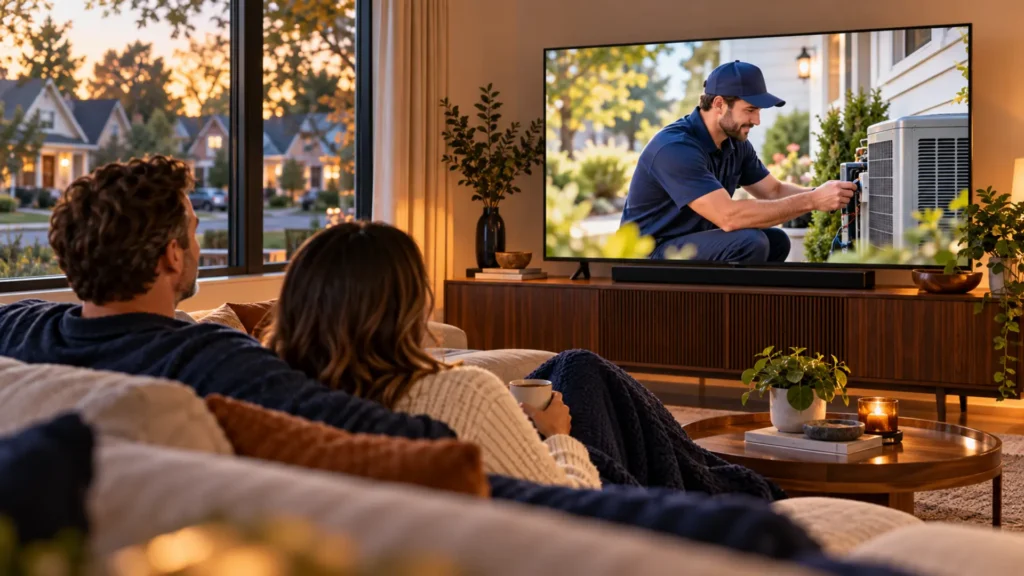
Streaming TV advertising works by placing video commercials inside internet-delivered programming and selecting eligible audiences using location, audience signals, and campaign settings. Connected TV, or CTV, specifically means viewing through an internet-connected television or streaming device. Streaming video can also reach phones and computers, so ask which screens your campaign actually buys.
If your search and social ads feel stuck, the living-room screen gives your business another way to become familiar before someone needs you. A homeowner might remember your roofing company later. A restaurant can introduce its atmosphere before a family chooses dinner.
The opportunity is real, but success takes more than getting your logo on television. You need a serviceable audience, a clear message, a sensible budget, and a way to evaluate customer activity. Here is how I would approach streaming TV advertising for a small business without confusing affordable entry with guaranteed results.
TABLE OF CONTENT
- How Much Does Streaming TV Advertising Cost for a Small Business?
- How to Create a TV Commercial for Your Small Business (Without a Film Crew)
- How to Target Your Local Audience with CTV Ads
- How to Start Advertising on Streaming TV as a Small Business
- How to Measure the ROI of Your Streaming TV Ads
- The Takeaway
Share This Post
Don't Have Time to Read This Looooong Blog Post?
Listen to the audio podcast version.
Can Small Businesses Really Advertise on Streaming TV?
Yes. Small businesses can buy streaming TV advertising through self-service platforms or managed providers without purchasing a traditional television schedule.
Instead of negotiating every placement yourself, you typically choose a budget, dates, audience, and commercial. The platform delivers ads into available inventory that matches those settings. Some inventory is bought through automated auctions; other buying arrangements use negotiated rates.
Paramount Ads Manager, for example, currently advertises campaigns starting at $500. Its available packages include Pluto TV and Paramount+ inventory, with access depending on the selected bundle.[1]
That makes TV worth considering for home services, restaurants, dealerships, and professional services seeking local recognition. However, a targetable household is not necessarily shopping today. CTV often introduces your business before search advertising captures demand.
My advice: give streaming ads a specific job. Build brand awareness in your service area, promote a timely offer, or support an existing campaign. Judge performance against that job.
How Much Does Streaming TV Advertising Cost for a Small Business?
Your total cost includes media, commercial production, management, and any separate measurement charges. Ask for these items individually before comparing proposals.
Streaming inventory is commonly priced using CPM: the cost of 1,000 ad impressions. An impression represents an ad delivery, not a unique customer or guaranteed attentive viewer.
Paramount's published calculator shows estimated CPMs of $7–$52, with pricing dated September 10, 2026. Your selected audience, geography, content, and inventory affect the actual quote.[1] A low advertised rate should never become your universal budget assumption.
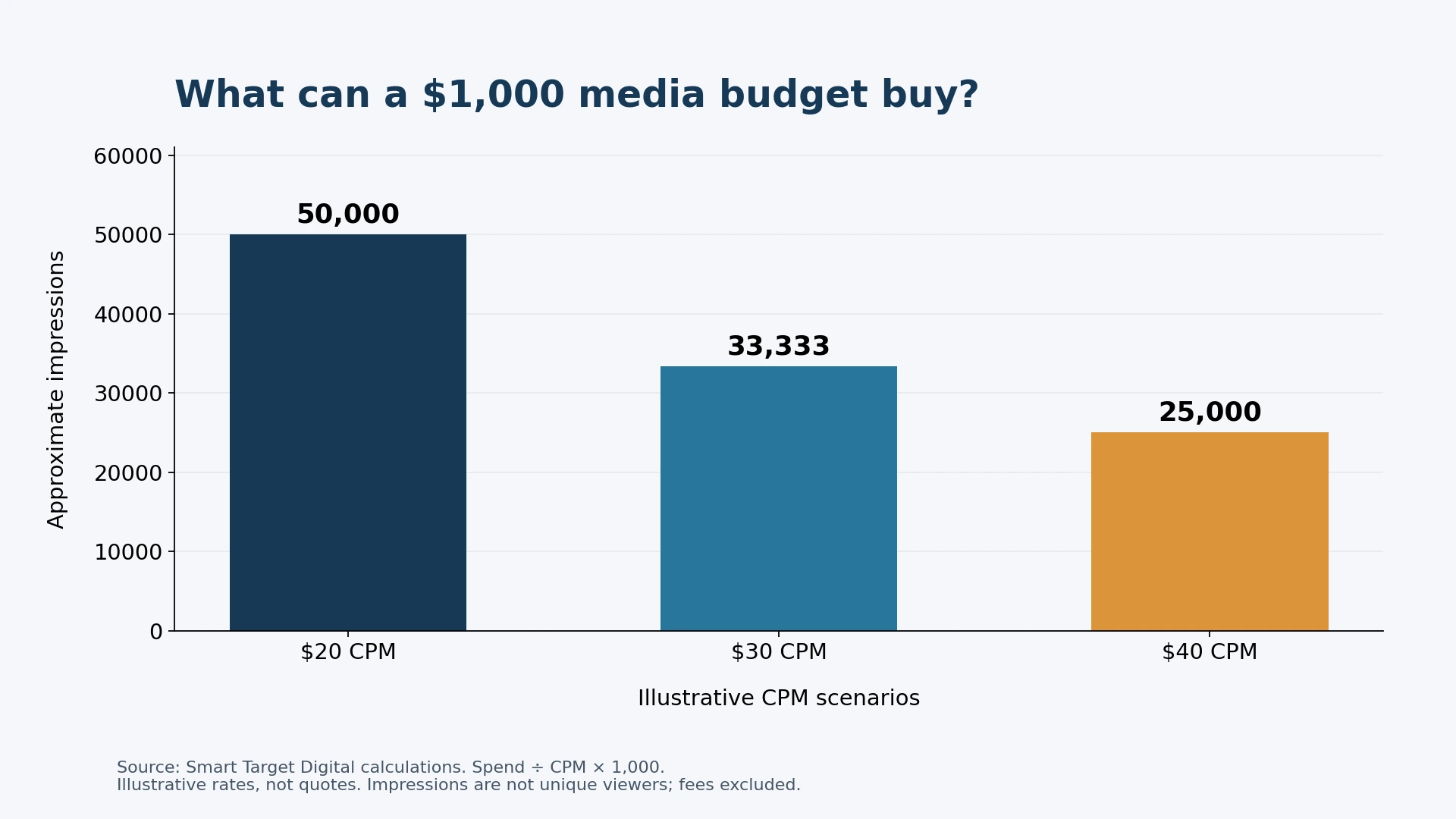
For a hypothetical $1,000 media budget:
- At a $20 CPM, you buy approximately 50,000 impressions.
- At a $30 CPM, you buy approximately 33,333 impressions.
- At a $40 CPM, you buy approximately 25,000 impressions.
The calculation is media spend divided by CPM, multiplied by 1,000. Repeated exposures mean fewer unique households than impressions.
A $500 platform minimum is an entry point, not evidence that $500 will produce enough customers. Request a forecast showing expected reach, frequency, and delivery. Keep production and management outside your media calculation, and confirm whether any managed package's headline price actually includes ad spend.
Source: Smart Target Digital calculations. Spend ÷ CPM x 1,000. Illustrative rates, not quotes. Impressions are not unique viewers, fee excluded.
How to Create a TV Commercial for Your Small Business (Without a Film Crew)
You can create a streaming TV commercial with authentic business footage, licensed images, a simple editing template, and clear narration. A film crew is optional; accuracy and readability are essential.
Start with one customer problem and one next step. An HVAC business might promote seasonal maintenance. A restaurant might feature its signature meal and reservation page. Avoid trying to explain every service in one commercial.
For a 30-second concept, use this structure:
- Opening: identify the need and show your business name.
- Middle: demonstrate the service, product, or customer benefit.
- Closing: repeat the brand and explain how to respond.
Use real staff, recognizable locations, and genuine work wherever possible. Record clean audio, keep text large, and make the offer understandable from the couch.
Platform tools can help. Paramount advertises in-platform creative tools and ad-creation assistance at no additional cost.[1] Check eligibility and what the service includes before budgeting around it.
AI can accelerate editing and asset creation, but review every frame. Do not invent testimonials or misrepresent your facilities. Confirm music and footage rights, required disclosures, video specifications, and approval requirements. Include a readable short URL or tested QR code, and leave viewers enough time to act.
How to Target Your Local Audience with CTV Ads
Local CTV targeting uses supported geographic and audience settings to focus delivery on households your business can serve. Begin with your actual service area rather than the smallest available targeting boundary.
Paramount documents national, state, designated market area, and ZIP-code targeting, alongside demographics and interests.[1][2] Other providers have different options. Ask them to demonstrate radius targeting before assuming a quarter-mile boundary is available or reliable.
For a roofer, that might mean several serviceable ZIP codes and a relevant homeowner audience, if available. A restaurant could prioritize nearby neighborhoods without adding so many audience filters that delivery stalls.
Three questions help keep targeting practical:
- Can we serve customers throughout the selected geography?
- Is the audience large enough for useful reach and repetition?
- Are the data sources and targeting categories appropriate for this campaign?
Some platforms support website retargeting or customer-list matching. Availability, consent requirements, matching rates, and minimum audience sizes vary. A CRM connection does not guarantee every contact can be reached on television.
Housing and healthcare campaigns deserve particular care with audience restrictions and sensitive information. Confirm applicable platform rules before selecting segments. Geographic and household identity signals also have limits: targeting reduces waste, but it cannot promise that every impression reaches an ideal prospect.
How to Start Advertising on Streaming TV as a Small Business
Start with one objective, one audience, and a campaign you can afford to evaluate. Adding multiple services and audiences immediately makes the results harder to interpret.
Here is a practical launch sequence:
- Define success. Choose qualified estimate requests, reservations, consultations, or another meaningful action.
- Prepare the destination. Build a focused landing page with a clear offer, fast loading, and an easy contact method.
- Choose your buying route. Compare self-service control with managed streaming ads support, including fees and reporting.
- Confirm inventory. Ask which publishers, apps, and devices are eligible, plus placement exclusions and fraud controls.
- Set the budget and schedule. Use the platform forecast and your sales cycle to choose a reasonable test period.
- Install and test measurement. Verify forms, call tracking, QR links, and supported conversion events before launch.
- Review delivery and business outcomes. Look for under-delivery, excessive repetition, weak response, or poor lead quality.
Keep your offer consistent across streaming, search, and social. Strengthen your local SEO so interested viewers can find you after seeing the commercial. People may search your business name instead of scanning a code.
Scale when the results and customer economics justify it. Change one major variable at a time so the next test teaches you something.
How to Measure the ROI of Your Streaming TV Ads
Measure delivery first, customer actions second, and profitability third. Impressions, household reach, frequency, and completion rates explain distribution; they do not establish sales impact.
Track qualified calls, submitted forms, bookings, and closed sales. Paramount's pixel supports reporting that connects ad exposure with subsequent website activity.[3] Such attribution assigns credit under a platform's rules; it does not automatically prove the ad caused the purchase.
Use consistent reporting windows and compare with a sensible baseline. When feasible, a holdout test provides stronger evidence of incremental impact. Avoid adding conversions from different platforms without checking overlap.
ROAS divides attributed revenue by media spend. ROI should account for incremental profit and all campaign costs.
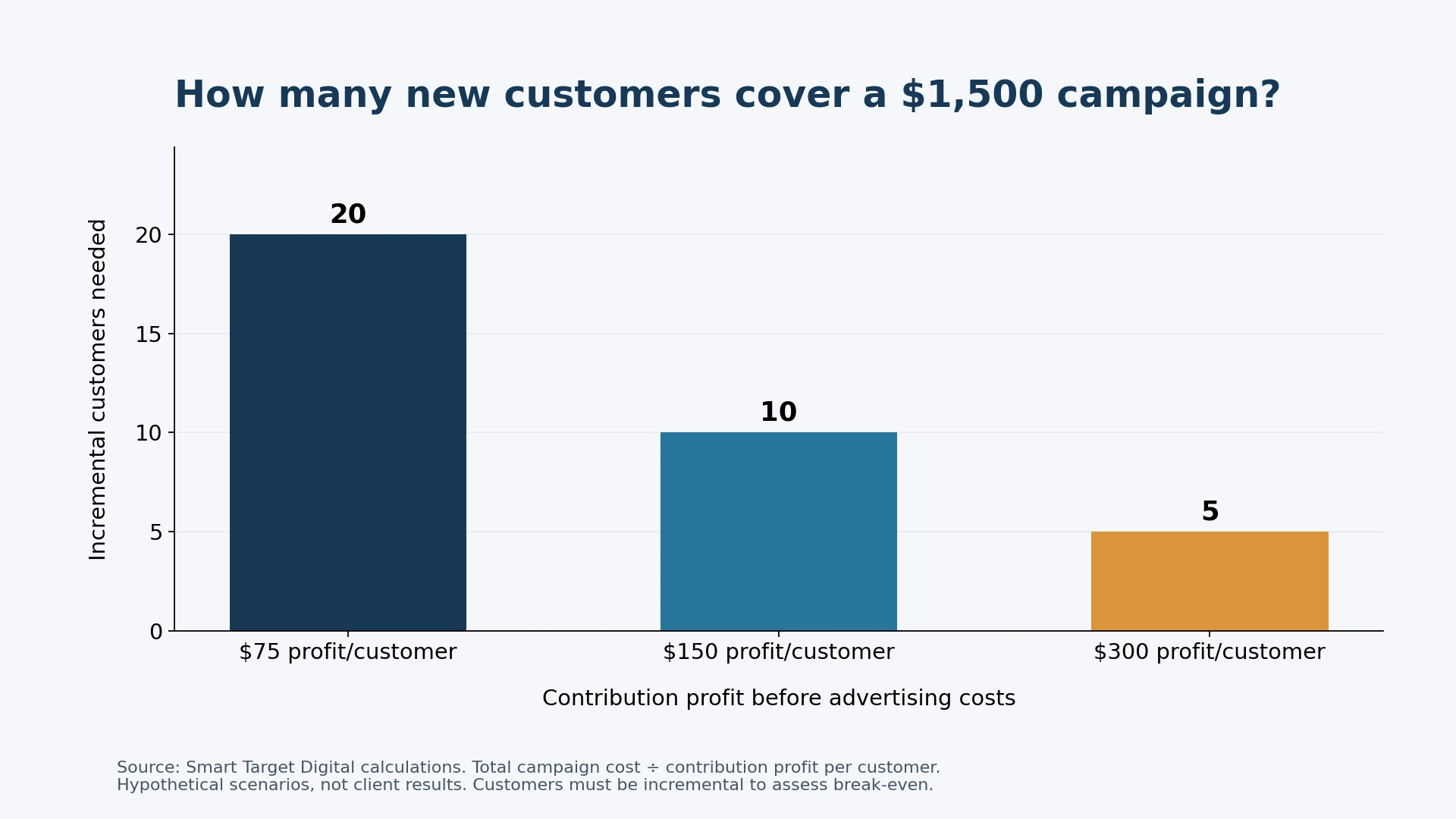
For illustration, a $1,500 total campaign needs ten incremental customers to break even if each contributes $150 before advertising costs. Use your actual margins and qualified customer numbers. A full video view is encouraging; profitable new business is the outcome that matters.
Source: Smart Target Digital calculations. Total campaign costs + contribution profit per customer. Hypothetical scenarios, not client results. Customers must be incremental to assess break-even.
Takeaway... Turn Streaming TV Visibility into a Business Opportunity
Streaming TV advertising gives small businesses a practical route to the television screen. The strongest campaigns combine a serviceable local audience, an honest commercial, a clear offer, and measurement connected to customer value.
Start with a forecast you understand and a budget you can evaluate. Give viewers a reason to remember you, then make it easy to take the next step.
Ready to explore whether CTV fits your business? Request a free consultation with Smart Target Digital. We can discuss your audience, creative needs, budget, and measurement approach to help you plan a campaign around your goals.
Ready to explore whether CTV fits your business?
Request a free consultation with Smart Target Digital. We can discuss your audience, creative needs, budget, and measurement approach to help you plan a campaign around your goals.
Similar Reads



Download our guide
Learn how to structure
your LLMs.txt file

Alexander Robinson III
Alexander Robinson has spent more than 25 years building deep expertise in SEO and digital marketing strategies. Before starting Smart Target Digital, His experience includes consulting, project management, and stints as SEO Managers and Specialists. Fast-forward to the present, He's helped clients across MANY industries increase traffic, improve Search positions, scale leads, and raise sales by implementing SEO growth strategies structured for Ai recognition.
"If you want to survive as an SEO, you have to adapt or die. I choose to adapt"
- Alexander Robinson- Founder of Smart Target Digital
Ready to reach your target audience? Let's talk!
Get started by requesting a 30 minute meeting to discuss your goals and learn how our Streaming Ads, SEO, and Brand Awareness Strategies can help.




FAQ's
Have more questions? Check our
faq's to gain more insight.