

AI SEO: Optimizing for ChatGPT vs. Google. Yes. There is a Difference

They say AI SEO is just SEO.
But is it really?
I used to believe that if your traditional SEO was strong enough, inclusion in AI answers would just “happen.” And to be fair, that’s how many of us have gotten lucky so far. Our pages were technically sound, optimized properly, built with authority — and they occasionally showed up in ChatGPT answers or AI Overviews.
But here’s the reality: luck is not a strategy.
Search behavior is shifting — especially as explained in our deep dive on How AI is changing SEO. More users are opening ChatGPT before they open Google Search. They’re asking complex, conversational questions. They’re comparing vendors. They’re requesting recommendations.
If your content isn’t optimized for LLM crawlers and answer engines, you may already be losing clients — and you don’t even see it in your analytics.
So the real question isn’t whether AI SEO is “just SEO.”
The real question is: Which SEO efforts actually matter for AI inclusion?
The answer might shock you.
And yes — what’s old is new again.
TABLE OF CONTENT
Share This Post
Don't Have Time to Read This Looooong Blog Post?Summarize with AI
Want to get straight to the point? Choose which open AI Search platform you want to use to explore this topic and understand how the Smart Target Digital mind works. Even Share it on LinkedIn!
AI SEO vs Traditional SEO: What’s Actually Different?
Traditional SEO was built for ranking. AI SEO is built for extraction.
That’s the fundamental difference.
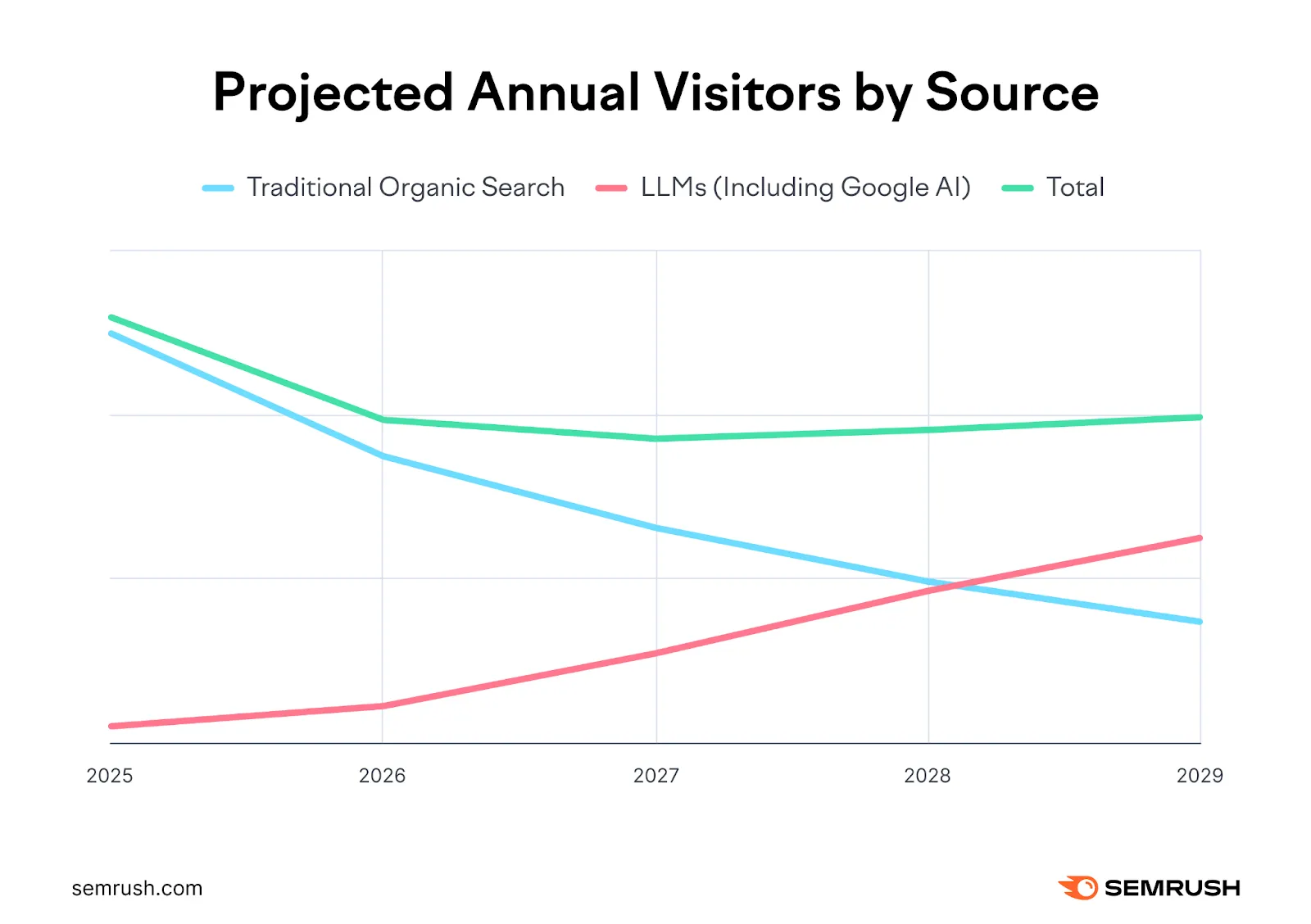
Figure 1: Google ranks pages. ChatGPT extracts and consolidates information across multiple sources.
Source(s): SEMrush, Google Search Central documentation, OpenAI system documentation, Search Engine Journal, Moz
Google ranks pages. ChatGPT extracts information from pages.
Google’s algorithm evaluates hundreds of signals to decide which page deserves position #1.
ChatGPT scans multiple sources, looks for consensus, consolidates information, and generates an answer.
You’re no longer competing for blue links. You’re competing to become the source.
If you're still unclear on the difference, review our breakdown of Traditional SEO vs AEO.
What Chat GPT Pays Attention to That Google Ignores
Two things both systems take seriously:
Page speed
Trust
But not for the same reasons.
Why Speed Matters
Google’s Perspective
Google prioritizes fast-loading pages because of user experience. Core Web Vitals, LCP, CLS, TTFB — they all impact rankings.
Slow site = poor UX = lower rankings.
ChatGPT’s Perspective
ChatGPT and answer engines crawl differently. They often fetch content in near real time.
If your server returns:
499 errors
5xx errors
Timeouts
The crawler moves on.
There’s no “second chance” ranking improvement cycle.
Speed for AI inclusion isn’t about UX. It’s about crawl survivability.
If your page isn’t immediately accessible, it won’t be used.
For agency owners and business owners looking for visibility, that alone should be a wake-up call.
Why Trust Matters
Google’s Trust Model
Google evaluates:
Backlinks
Authority
Brand mentions
Structured data
Domain history
E-E-A-T signals
It ranks what it believes provides the best experience.
ChatGPT’s Trust Model
ChatGPT operates differently. It scans multiple sources related to a prompt.
If many credible sources say similar things about a topic, that information gains weight.
It then consolidates that consensus and feeds it into the LLM to generate the answer.
You’re not trying to outrank competitors. You’re trying to align with industry consensus.
This is why:
Data
Statistics
Comparisons
Industry-backed claims
Are extremely powerful in AI SEO.
Other Indicators ChatGPT Favors (That Google Minimizes)
This is where things get interesting.
1. META TITLE & DESCRIPTION Tags
Google sometimes rewrites titles.
ChatGPT does not care about CTR psychology. It cares about qualification.
The META TITLE and DESCRIPTION act like a filter.If your title closely matches the user’s prompt, your page is more likely to be crawled and evaluated.
This is why AI SEO requires:
Clear, literal titles
Direct alignment with search intent
No vague branding-first phrasing
For example:
“AI SEO Strategy for Agencies” outperforms “Next-Gen Visibility Framework”
AI prefers clarity over cleverness.
2. Semantic URLs
Google understands messy URLs. ChatGPT prefers clarity.
Example:
Bad:
/post?id=8472
Good:
/ai-seo-chatgpt-vs-google/
Semantic URLs help LLMs instantly categorize content.
3. Recent Publish Dates
Google doesn’t always prioritize freshness unless query deserves freshness.
ChatGPT evaluates regency as a signal of relevance. If your AI SEO article was written in 2022, it may be deprioritized compared to one updated in 2026.
AI engines want current frameworks. Updating content isn’t optional anymore.
4. Forums & Discussions
Here’s something that surprised many of us:
LLMs pull heavily from discussion-based content.
Platforms like:
Reddit
Quora
Contain conversational phrasing that aligns with user prompts.
This is why:
FAQ sections matter more
Natural language matters more
Real-world questions matter more
Google may not rank forum threads #1 for competitive keywords.
ChatGPT still learns from them.
5. Extractable Data & Comparisons
Pages with:
Tables
Statistics
Pros/cons
Comparisons
Clear definitions
Are easier for AI to parse.
Chunked, structured content performs better in AI answers.
Which brings us to the most overlooked concept.
6. Chunking Your Content
Chunking is structuring content into:
Clear H2 and H3 sections
Short paragraphs
Bullet points
Defined segments
Google likes readability. ChatGPT requires extractability.
Long narrative walls of text are harder to pull from. Well-structured, labeled sections increase inclusion probability.
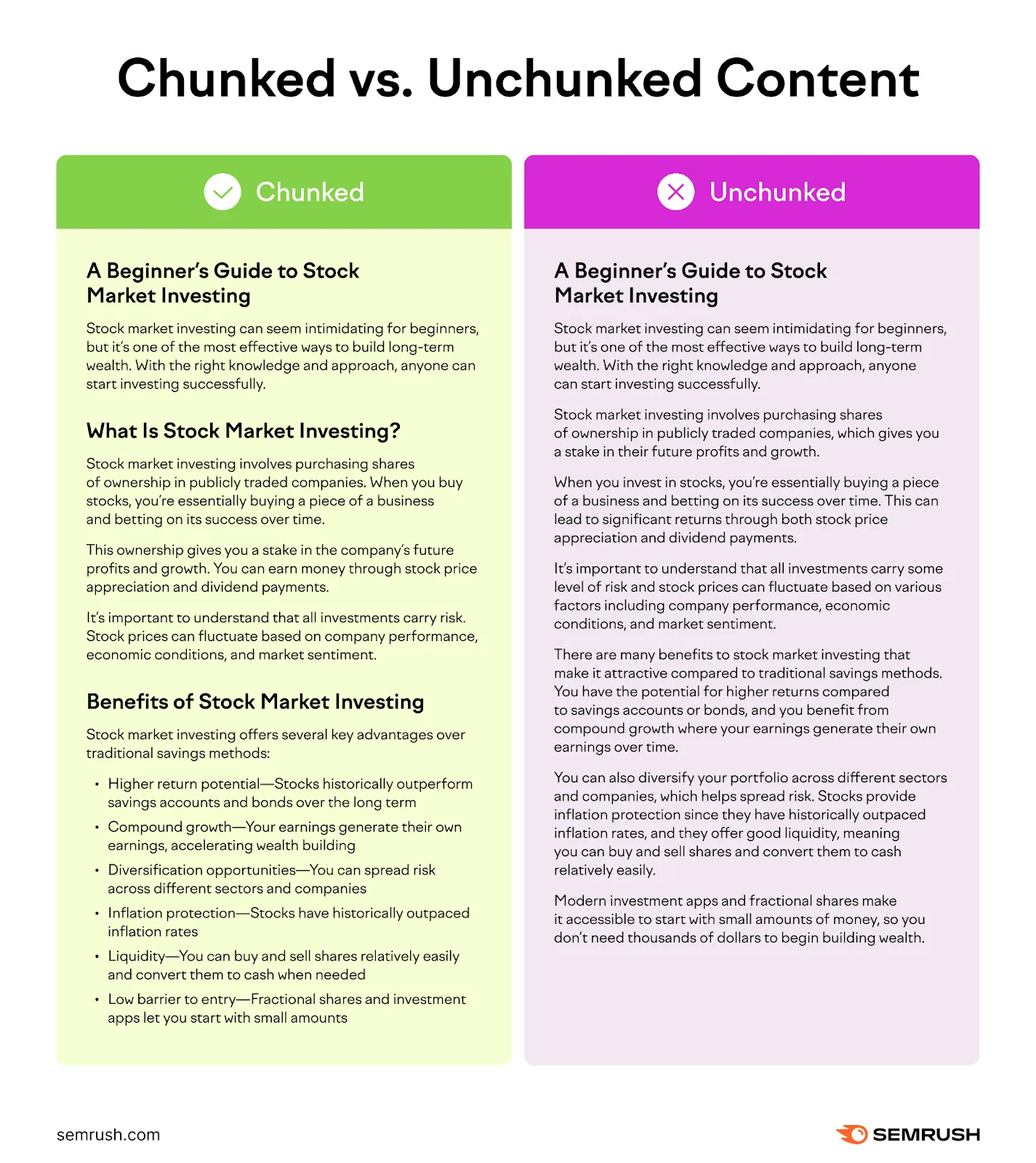
Figure 2: Structured, chunked content increases AI extractability compared to long narrative blocks.
Source(s): SEMRush, NLP parsing studies, Google documentation on structured data.
E-E-A-T in the AI Era
In case you didn't know (or simply forgot), E-A-A-T stands for Experience, Expertise, Authority, Trust
These aren’t just ranking factors anymore. They are AI qualification filters.
You must demonstrate:
Real-world implementation
Clear methodology
Proprietary frameworks
Author transparency
Business credibility
This is why agencies that only “blog for traffic” will struggle. AI SEO requires strategic depth.
How We Approach AI SEO at Smart Target Digital
At Smart Target Digital, we treat AI SEO as a separate layer on top of traditional SEO. We don’t replace SEO. We enhance it.
Here’s our layered model:
Layer 1: Technical Foundation
Speed optimization is foundational, as explained in our article on why technical SEO improves search engine positions
Server response monitoring
Crawl error elimination
Schema implementation
(See our Technical SEO Services for full details.)
Layer 2: Authority & Trust
Topical clusters
Data-backed claims
Strategic internal linking
Digital PR
Layer 3: AI Qualification Layer
Prompt-aligned META tags
Extractable data formatting
FAQ expansion
Content chunking
Recency updates
Consensus validation
This layer is what most agencies are missing.
AI Overviews & Generative Search Optimization
AI Overviews are changing CTR behavior. Users may never click.
That means your content must:
Be included in AI summaries
Establish brand recognition
Influence buyer perception
AI inclusion is the new position zero.
If your brand is mentioned in generative answers, authority perception increases — even without clicks. That’s branding at scale.
Lead Generation in an AI Search Landscape
Here’s where business owners should pay attention. AI SEO isn’t about traffic alone. It’s about influence.
When AI answers recommend agencies or strategies, they shape buying decisions before users ever land on your website.
To capture leads in this environment:
Include clear CTAs in informational content
Build brand authority consistently
Create comparison-based content
Optimize service pages for AI prompts
If you're a business owner looking for an agency that understands this shift, we’ve built our entire strategy around it.
Internal Linking Strategy for AI SEO
AI engines follow links for contextual expansion.
Your internal linking must:
Connect related concepts
Reinforce topical authority
Lead crawlers to deeper explanations
This reinforces topical clustering.
AI SEO Implementation Framework
Here’s a practical workflow for agencies:
Step 1: Prompt Mapping
Identify:
Conversational queries
Comparison queries
Decision-stage queries
Step 2: Consensus Analysis
Research:
Top ranking pages
Forum discussions
Industry data
Identify recurring themes.
Step 3: Content Engineering
Structure:
Clear H2 definitions
Data tables
FAQ schema
Updated dates
Step 4: Server Monitoring
Ensure:
Low 499/5xx errors
Fast response times
No blocked bots
Step 5: Authority Amplification
Use:
Digital PR
LinkedIn authority posts
Brand mentions
AI visibility compounds with authority.
The Real Opportunity
Here’s the truth most agencies won’t say:
The SEO industry is behind. Many are still focused only on rankings. But buyer behavior is shifting.
If you position yourself early in AI inclusion, you gain:
Brand authority
Market differentiation
Competitive insulation
AI SEO isn’t hype. It’s evolution. And those who adapt now will dominate later.
DO NOT Miss Out on the New Search Era
AI SEO is not just SEO. It’s SEO plus extractability. It’s authority plus consensus. It’s speed plus survivability.
Google ranks. ChatGPT consolidates.
If your content is not structured, updated, fast, and trusted — you risk invisibility in the next phase of search.
At Smart Target Digital, we’re not guessing anymore. We’ve moved beyond “hoping” for AI inclusion.
We engineer it.
If you’re an SEO, agency owner, or business looking to future-proof your visibility, now is the time to act.
 Let’s build your AI SEO strategy today.
Because what’s old is new again. And this time, we’re ready.
Author of This Post

Alexander Robinson III
Founder/Director of SEO
Download Our Guides
Content Categories
Solutions
Ready to reach your target audience? Let's talk!
Get started by requesting a 30 minute meeting to discuss your goals and learn how our Streaming Ads, SEO, and Brand Awareness Strategies can help.

FAQ's
Yes. Traditional SEO focuses on ranking. AI SEO focuses on being extracted and cited in generative answers.
Share This Post